

If you’d like to get a ductless air conditioner in Trion, GA, the team at Hitchcock Heating & Air can assist you. A ductless mini split could prove to be a good solution if you’d like your home to stay nice and comfortable in the summer. These types of air conditioners can get installed in a variety of locations; typically, they get mounted on exterior walls. Some of our customers in Trion have put them in their bedrooms, kitchens, and living rooms.
Mini Split AC in Trion, GA
FREE LABOR WARRANTY
Call For Details

"Hitchcock heating&air was on time, the professionalism and courtesy was above reproach. The technician was a young man named Andrew and he was outstanding. His knowledge of the job was unquestionably the best I've seen. He was polite, professional and overall an example all could follow. I highly recommend Hitchcock heating&air and if needed I will certainly use them again as they are highly skilled and dependable." - Douglas S.
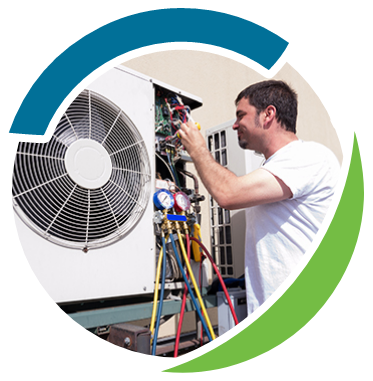
We can discuss options with you so that you can decide the most strategic place. Also, note that you can have more than one mini split installed. Moving forward with this strategy can give you an efficient way to keep various sections of your home cool.
Ductless Air Conditioner in Trion
The size of a mini split affects its cooling capability. As such, you’ll definitely want to get something that matches your needs. A unit that’s too small will struggle to keep the temperature down, and a unit that’s too large might cycle on and off frequently. This frequent cycling has the potential to negatively affect the longevity of the unit.
Other factors can affect the decision of which mini split to purchase.
- Energy efficiency (measured by SEER rating)
- Initial cost
- Any applicable warranties or tax credits
- Whether a unit can only cool or heat and cool
Some mini splits function as both heaters and air conditioners. This can work out very well if you have a space, such as an addition to your place, that you need to keep comfortable throughout the year. Other units work only as cooling units. You might get one of these if you already have a whole-home heating system and simply want to cool down a particular room in your Trion home.
In addition, mini splits vary in terms of how they can get controlled. Many mini splits have remote controls, and some have Wi-Fi capability. In this case, you could use a smartphone or tablet to turn the temperature up or down.
Ductless Mini Split Assistance
At Hitchcock Heating & Air, we give all of our customers in Trion our personal attention. Having been in the business since 1987, we know what it takes to do our job the right way. Trust us to get things done efficiently and to maintain a tidy workspace. We employ highly trained technicians who show a commitment to providing quality service, and we have experience with a variety of makes and models. If you’re interested, we offer financing on approved credit.
We offer outstanding AC repair, AC installation, furnace repair, whole house fan, air duct cleaning, and heating installation in Trion, GA!
Call Hitchcock Heating & Air to find out more about our ductless air conditioner services in Trion today.

CONTACT OUR SPECIALIST TODAY
SPECIALIST TODAY
©2026 Hitchcock Heating & Air. All Rights Reserved. License: # CR108040.